Build-Ready Ground
Hand over a clean, clear site pad ready for civil contractors, earthmovers, and concreters.
Commercial site preparation, acreage clearing, scrub mulching, and firebreak establishment across Parkhurst.
Clearing residential, acreage, and commercial parcels across Parkhurst and northern Rockhampton.
Whether you are preparing to build a new home, constructing boundary fencing, or establishing bushfire asset protection zones, our land clearing Parkhurst service delivers powerful site preparation.
Parkhurst contains large acreage blocks and light industrial zoning where invasive Leucaena and dense regrowth take over unmanaged parcels. Clearing in Parkhurst requires careful navigation of the Rockhampton Region Planning Scheme Biodiversity overlay and state Vegetation Management Act mapping, ensuring compliant clearing while managing dry-tropics bushfire risks.
Hand over a clean, clear site pad ready for civil contractors, earthmovers, and concreters.
Establish effective defensible fuel breaks around homes, sheds, and rural infrastructure.
Transform impenetrable weed thickets and woody regrowth into open, usable pasture or lawn.
We walk the boundary, identify retained trees, and check regulatory clearing mapping on RockePlan.
We establish the most cost-effective machinery combination (mulchers, excavators, chippers) for your parcel.
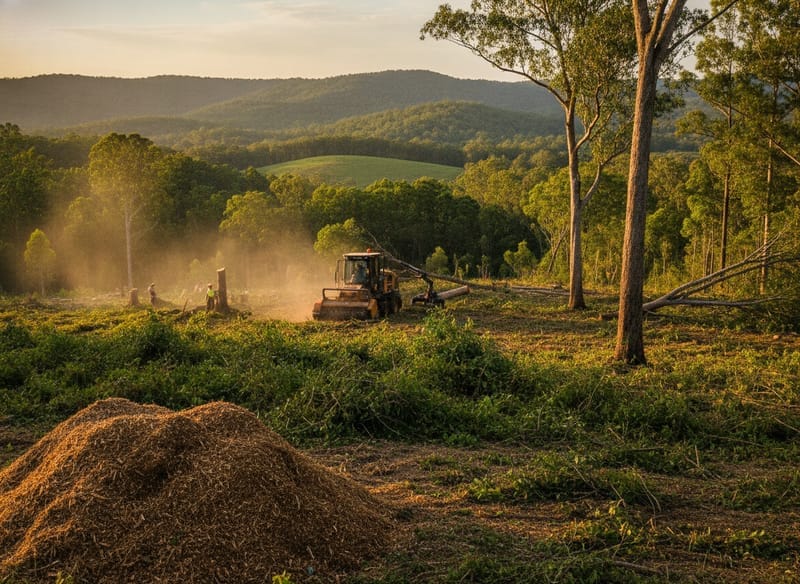
Our operators clear targeted scrub, fell designated trees, and process woody material cleanly.
Mulch is distributed across the soil surface to stabilise ground, leaving the site level and accessible.
If you are preparing a block for a new build, managing acreage, or extending your asset protection zone, our team provides the Land Clearing Parkhurst property owners rely on. Situated in the expanding northern corridor of Rockhampton, Parkhurst features a mix of fresh residential subdivisions and established rural-residential blocks. Getting your site prepared correctly sets the foundation for your entire project.
Whether you need to push back overgrown scrub, clear a footprint for a new shed, or selectively remove declared weeds like Leucaena and African Tulip, we have the heavy machinery and arboricultural expertise to handle it. Our team understands the dry tropics climate we operate in, ensuring your site is cleared safely before the wet season hits. We manage everything from thick understory removal to taking down mature Narrow-leaved Ironbarks, leaving your block clean, accessible, and ready for the next phase of development.
Bringing in a bulldozer to blindly scrape a block might seem like a quick fix, but unqualified land clearing often creates expensive headaches. Heavy machinery operators who lack arborist training frequently cause irreversible damage to the structural root zones of trees you actually want to keep. In the dry tropics, damaged trees become massive liabilities once the summer storms and downbursts roll through. DIY clearing or hiring uncertified operators also risks severe penalties from the Rockhampton Regional Council. If your property falls under a Biodiversity areas overlay or contains habitat protected by state mapping, clearing the wrong vegetation can result in massive fines and project delays. Furthermore, pushing over large timber without properly processing it leaves dangerous, unsightly debris piles that become a fire hazard during our long hot dry spells. We provide a completely different approach. As qualified arborists, we assess the site before a single saw is started. If your development application requires retaining specific trees under AS4970, we implement the correct Tree Protection Zones (TPZ). We selectively dismantle hazardous timber, process the canopy into usable mulch, and ensure your site is cleared efficiently without compromising soil stability or the health of retained native canopy.
From tight suburban boundaries to sprawling Parkhurst acreages, our team employs safe, efficient, and AS-compliant methods to clear your land. We tailor our approach to suit the terrain, the species involved, and the specific requirements of your development.
We clear the exact footprint required for new homes, sheds, and driveways. By strictly adhering to AS4970 standards for development sites, we establish structural root zones to protect any nearby Moreton Bay Ash or Forest Red Gum you wish to retain.
For blocks mapped under the Bushfire hazard overlay, we selectively thin vegetation to meet AS3959 requirements. We reduce fuel loads, crown-lift retained trees, and clear combustible understory while preserving the amenity of your acreage.
Not all blocks need to be stripped bare. We carefully target invasive species like Leucaena and African Tulip, along with dead or dangerous timber, allowing native grasses and established shade trees to thrive without competition.
Overgrown boundaries damage fences and restrict access. We clear linear corridors using chainsaws and chippers, ensuring boundaries are easily navigable for machinery and livestock while removing hazardous limbs that threaten your fencing.
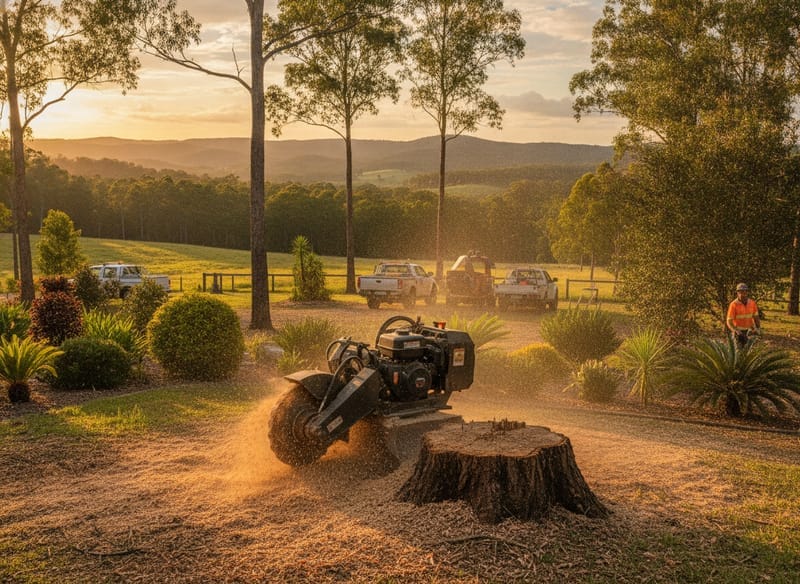
We run high-capacity 12-inch wood chippers to process cleared vegetation. This material can be removed in our tipper trucks, or left on-site as high-quality mulch to suppress weeds and prevent soil erosion during the Rockhampton wet season.
Delivering efficient Land Clearing Parkhurst property owners trust requires a highly structured, safety-first approach. Here is exactly how our team manages your site clearing from the initial call to the final sweep.
First, we conduct a comprehensive site assessment. We visit your Parkhurst property to evaluate the terrain, identify the species present, and check for any Rockhampton Regional Council planning overlays. If your project requires clearing inside a Biodiversity areas overlay, we will help clarify the parameters of your approval before work begins.
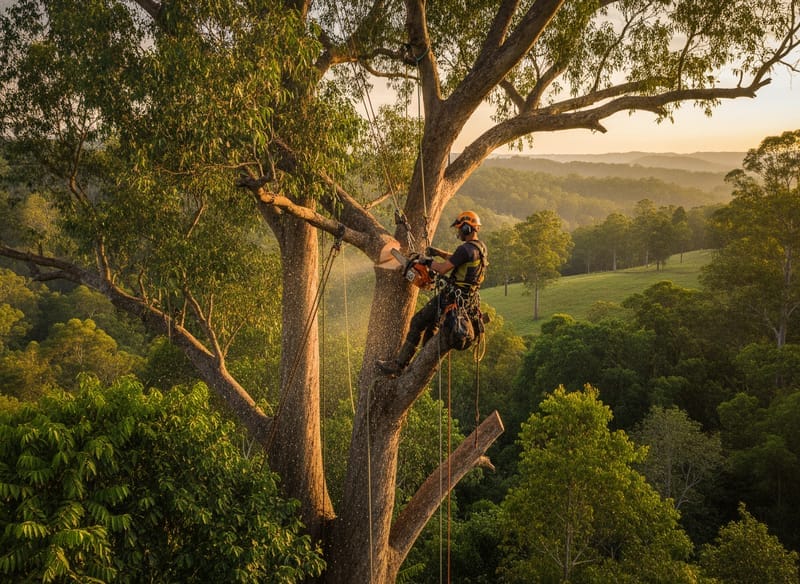
Next, we mobilise our fleet. Depending on the density of the vegetation, we bring in our heavy-duty wood chippers, tipper trucks, and ground saws (like the MS500i). For large, hazardous trees that cannot be safely felled from the base, our climbers use advanced rope-access techniques or elevated work platforms to dismantle the canopy piece by piece.
Once the vegetation is on the ground, we process it efficiently. Branches are chipped into mulch, and large logs are either removed via loader cranes or cut into manageable lengths. Finally, we conduct a thorough site cleanup, leaving your block clear, level, and ready for your builders or landscapers.
Land clearing requires serious risk management, which is why our team operates with comprehensive public liability and WorkCover insurance. You are protected at every stage of the project.
Our crew includes AQF Level 3 climbing arborists for hands-on operational work, and we can coordinate with AQF Level 5 consulting arborists if your Parkhurst block requires formal reporting for a RockePlan development application. We follow all Australian Standards, including AS4373 for any retained tree pruning and AS3959 for bushfire APZ clearing. From managing traffic on busy estate roads to operating heavy machinery safely, our compliance is strictly by the book.
Operating in Rockhampton’s dry tropics means understanding the intense cycles of drought and flood. While Parkhurst is largely free from the Fitzroy River flooding that impacts the southern flats, the violent wet season from November to March still dictates our clearing schedules.
Before we start any large-scale removal, we check the Rockhampton Regional Council’s RockePlan tool. Many blocks contain remnant vegetation, and clearing without checking the Biodiversity areas overlay or state vegetation mapping can lead to severe fines.
It is also worth noting that the state disaster clearing exemption following ex-Tropical Cyclone Koji remains active until January 2027. If your property suffered severe timber damage, you may have exemptions to clear fallen trees and woody debris to prevent property damage. Whether we are clearing storm-damaged Forest Red Gums or removing nuisance weeds, we know the local regulations inside out.
After our trucks roll out, your freshly cleared block will be highly exposed. We strongly recommend retaining the processed woodchip on-site to spread over bare earth. This significantly reduces topsoil erosion when the tropical summer storms arrive and helps suppress aggressive weed regrowth.
If you have retained mature trees during the clearing process, monitor them closely. The sudden change in wind exposure can sometimes stress older native species. If you notice deadwood appearing in the canopy or structural leaning before the storm season, call our team back for a targeted inspection and selective pruning.
Land clearing in Parkhurst is quoted based on acreage size, vegetation density, terrain slope, machinery requirements, and environmental retention criteria.
We conduct an on-site survey and supply a clear, itemised proposal detailing all plant, operator, and disposal rates.
We provide acreage clearing and site preparation across Parkhurst and surrounding Rockhampton districts.
Contact our team for professional site preparation, acreage mulching, and vegetation clearing.
Get a Free Quote