Restored Property Safety
Remove dangerous hanging limbs that threaten family members, vehicles, and pets below.
Post-storm clearing, multi-tree cleanup, and hazardous limb removal for residential and acreage properties in Parkhurst.
Restoring storm-damaged properties across Parkhurst, Kawana, Norman Gardens, and northern Rockhampton.
When tropical depressions, cyclones, or summer severe thunderstorms strike the region, our storm damage tree removal Parkhurst crew clears the destruction.
Severe summer convective storms moving off the Berserker Range regularly hit Parkhurst with microburst winds and torrential rain. Saturated soil conditions, especially in the wake of Fitzroy flood events, weaken root holds on large gums and brittle poincianas, resulting in heavy limb tear-outs and multi-tree blockages.
Remove dangerous hanging limbs that threaten family members, vehicles, and pets below.
Obtain clear arborist documentation and itemised invoices tailored for rapid insurance claim assessment.
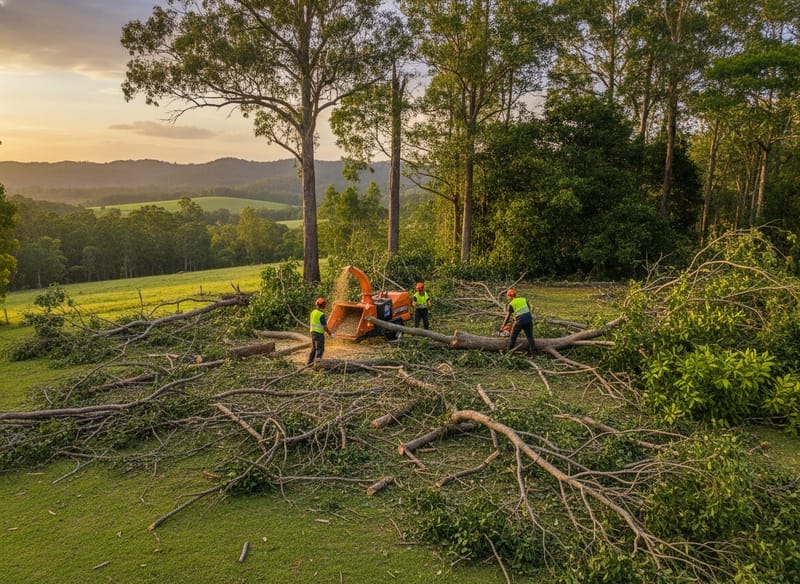
Transform chaotic piles of storm-tossed branches and logs into neat mulch and fully clear grounds.
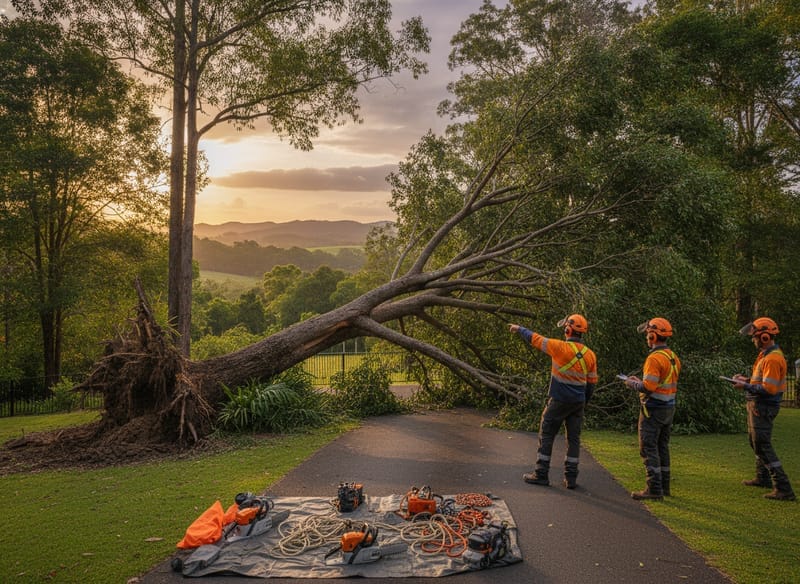
We walk your Parkhurst grounds to identify all immediate hazards, hanging branches, and unstable root plates.
We establish a sequence of works, tackling structures and access routes before general yard debris.
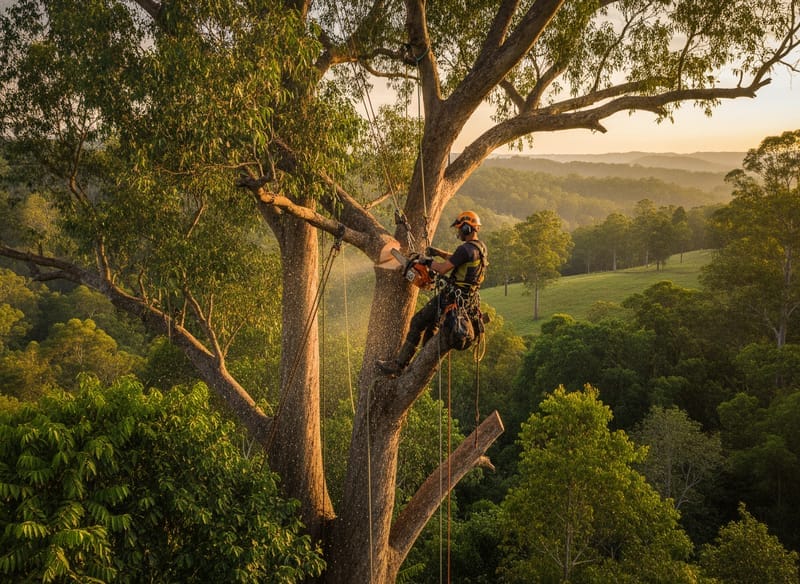
Our climbers and ground crew systematically cut, lower, and process damaged timber.
All fallen debris is chipped, wood stacked or removed, and the site raked and left completely tidy.
When the wet season hits the Fitzroy region, violent downbursts and saturated soils can wreak havoc on local properties. If you are dealing with fallen branches, uprooted trunks, or hazardous hangers, you need professional storm damage tree removal Parkhurst. Our team at Rockhampton Arborist is equipped to handle emergency make-safes, complex structural failures, and full site cleanups across Parkhurst and the surrounding Rockhampton region. Whether it is a towering Forest Red Gum that has split its trunk or a Moreton Bay Fig shedding large limbs over a roof, help is essential. We understand the stress of post-storm chaos, especially in the wake of events like ex-Tropical Cyclone Koji. Our climbers and truck operators are local experts who arrive fast, assess the danger, and execute safe, efficient clearing so you can secure your property and get back to normal.
After a severe summer storm or cyclone remnant batters Parkhurst, the temptation to break out the chainsaw and clear the yard yourself is strong. However, storm-damaged trees are incredibly unpredictable. Fallen canopies hold immense stored tension, and cutting the wrong branch can cause a heavy trunk to roll, spring up, or collapse further. DIY cleanups frequently lead to property damage, severe injury, or worse.
Hung-up branches, known as widow-makers, and fractured root plates require specialised rigging and arborist expertise to dismantle safely. Unqualified operators or well-meaning neighbours often lack the knowledge to read this tension or the insurance to cover mistakes. Furthermore, performing improper cuts leaves standing trees vulnerable to accelerated decay and future failure.
Our team provides a definitive solution. We bring extensive training, heavy-duty chippers, and elevating work platforms to safely dismantle compromised vegetation. We follow AS4373 standards for any restorative pruning on trees that can be saved, ensuring clean branch collar cuts rather than aggressive lopping. For trees that are beyond saving, we execute complete, controlled removals that protect your home, fences, and underlying infrastructure, giving you total peace of mind when the weather clears.
We utilise specialised arboriculture methods to manage complex storm debris, hung-up limbs, and uprooted trees safely.
Fallen and leaning trees hold massive kinetic energy. Our AQF Level 3 climbers use advanced chainsaw techniques to safely relieve tension and compression wood, preventing the trunk from splitting, rolling, or springing during processing.
When a massive Moreton Bay Ash or Leichhardt Tree falls onto a roof or structure, we use crane-assisted removals. This allows our team to lift heavy sections vertically, eliminating secondary impact damage to your Parkhurst property.
For steep or tight-access blocks where machinery cannot fit, our arborists deploy advanced double-rope climbing techniques. We safely access fractured canopies to remove dangerous hangers and stabilise the tree before further clearing.
Saturated soils during the wet season often lead to whole-tree failure. We carefully detach the main trunk from the root plate, ensuring the heavy root ball settles back into the cavity safely without endangering our crew.
We process all storm debris on-site using heavy-duty wood chippers. The branches and foliage are turned into high-quality mulch, which can be left for your gardens or hauled away in our tipper trucks.
Dealing with post-storm tree hazards requires a structured, safety-first approach. Here is exactly how our team handles your emergency clearing from start to finish. 1. Rapid Site Triage When you call us for storm damage tree removal Parkhurst, we arrive promptly to assess the damage. We walk your property and categorise the hazards, prioritising trees resting on structures, blocking access, or hanging over powerlines. 2. Photographic Evidence and Quoting Before moving a single branch, we document the damage. We take detailed photos and provide a comprehensive quote that breaks out each job line. This documentation is crucial for homeowners submitting claims to their insurance providers. 3. Make-Safe Operations Our climbers and machinery operators target the immediate dangers. We use elevated work platforms or rope access to safely remove hung-up limbs and relieve tension from fallen trunks resting on roofs or fences. 4. Complete Dismantling and Processing Once the critical hazards are neutralised, we systematically dismantle the remaining compromised timber. Ground crews process branches through our high-capacity chippers, while larger logs are sectioned for removal. 5. Site Cleanup and Handover We rake the site clear of storm debris and haul away the timber in our trucks. You are left with a safe, tidy yard and, if requested, a pile of fresh mulch for your garden.
When executing storm damage tree removal, compliance and safety are our highest priorities. All restorative pruning on storm-damaged trees strictly adheres to AS4373 — Pruning of Amenity Trees, ensuring we never resort to harmful topping or lopping practices. We are fully public liability insured and carry comprehensive WorkCover for our entire team.
Furthermore, we provide detailed, itemised quotes and photographic evidence before commencing any make-safe work, streamlining the process for your insurance claims. Our arborists hold all required tickets, including Working at Heights and EWP licenses, ensuring every hazardous removal is completed to the highest Australian safety standards.
Parkhurst is a rapidly growing area with a mix of new residential estates and established acreage blocks. The local climate means long dry spells followed by intense summer storms, which often stress native canopies before hammering them with heavy rain and wind. Saturated soil is a primary driver of root-plate failures in local species like Forest Red Gums and Moreton Bay Ash.
Navigating the Rockhampton Regional Council planning scheme is critical, especially if your property falls under the Biodiversity areas overlay or Bushfire hazard mapping on RockePlan. However, following the major flooding from ex-Tropical Cyclone Koji in January 2026, a state disaster clearing exemption is in place until January 2027. This allows landholders to remove fallen timber and prevent imminent property damage without standard council approvals. Our team always recommends photographing the hazard before we start work to keep a written justification on file.
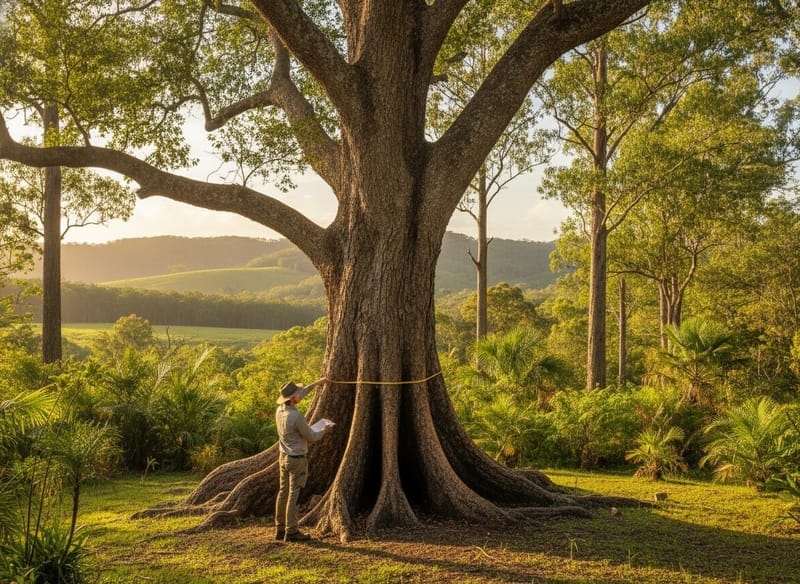
After we clear the immediate storm debris, it is vital to monitor the remaining trees on your Parkhurst property. High winds can cause microscopic fractures in branches that may not fail until weeks after the storm. Watch for dying foliage, fresh cracks in the bark, or a sudden lean in the trunk. If a tree was heavily pruned to restore its structure, we recommend booking a follow-up inspection in six to twelve months. Our AQF Level 5 consulting arborist can assess the canopy for healthy epicormic growth and ensure no hidden decay has set in. If you notice any hanging branches or suspect structural weakness, contact our team for a reassessment.
Storm damage clearing in Parkhurst is quoted based on the volume of fallen timber, structural complexity, machine access, and insurance requirements.
We provide clear, written estimates and itemised quotes suitable for private homeowners and insurance assessors.
We provide dedicated post-storm tree clearing across Parkhurst and neighbouring communities.
Contact our experienced arborist crew to safely remove fallen timber, hanging branches, and storm debris.
Get a Free Quote