Immediate Clearance
Gain vital separation between heavy tree canopies and your roofs, carports, and access tracks.
Professional height reduction, selective canopy control, and safe structural tree management in Port Curtis
Serving Port Curtis, Depot Hill, Gracemere, and across Rockhampton.
When property owners look for tree lopping Port Curtis, they usually need a tree's height significantly lowered, branches backed away from a building, or an overgrown canopy brought under control. We deliver these outcomes using safe, structured canopy reduction.
In Port Curtis, fast-growing trees like African Mahogany and large Figs are frequently subject to crude lopping, resulting in massive dense shoots that snap in summer thunderstorm downbursts. We provide proper structural reductions that control tree height while preserving the tree's wood density and resistance to decay.
Gain vital separation between heavy tree canopies and your roofs, carports, and access tracks.
Avoid the severe hollows, rot pockets, and weak branch unions caused by standard lopping.
Reduce heavy shade and allow light through to your grass, gardens, and building surrounds.
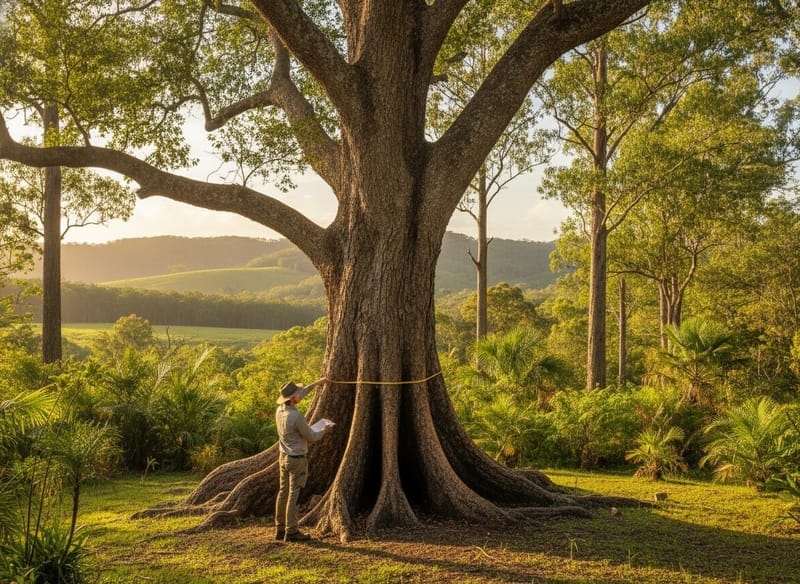
We inspect the tree's height, spread, and the location of your structures in Port Curtis.
We identify natural growth points where height or spread can be reduced safely without flush-topping.
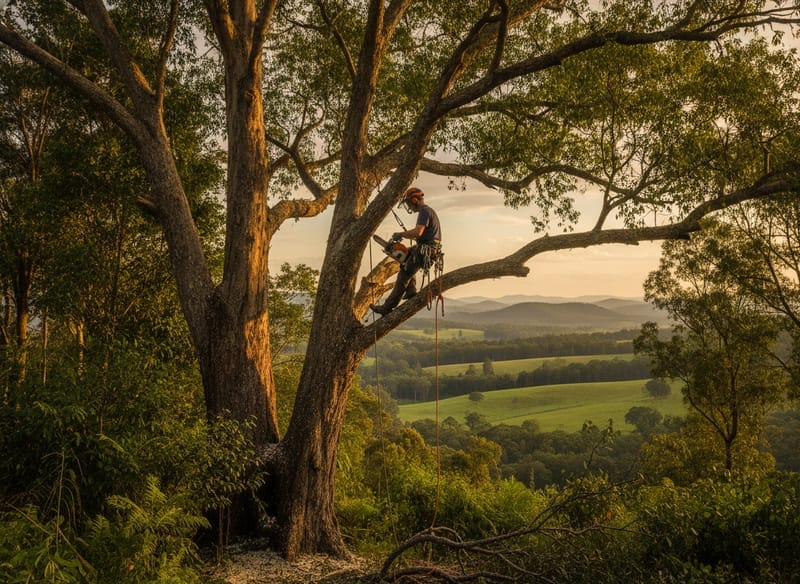
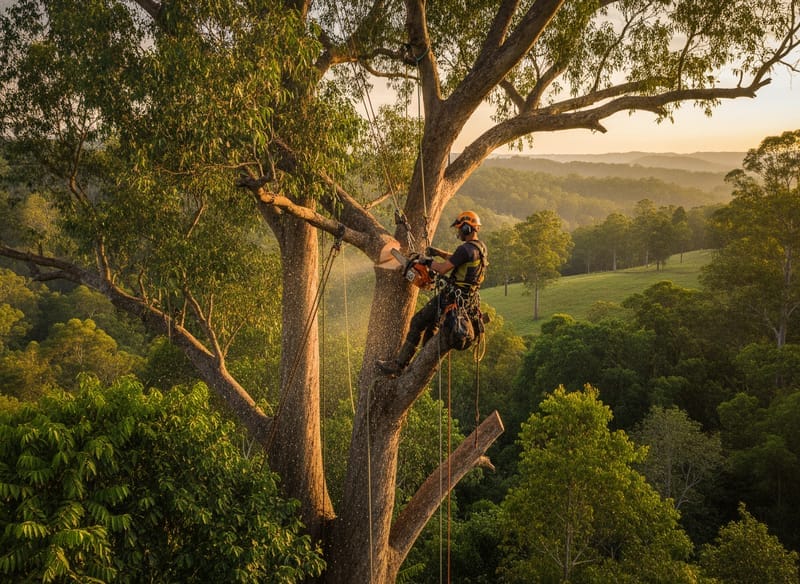
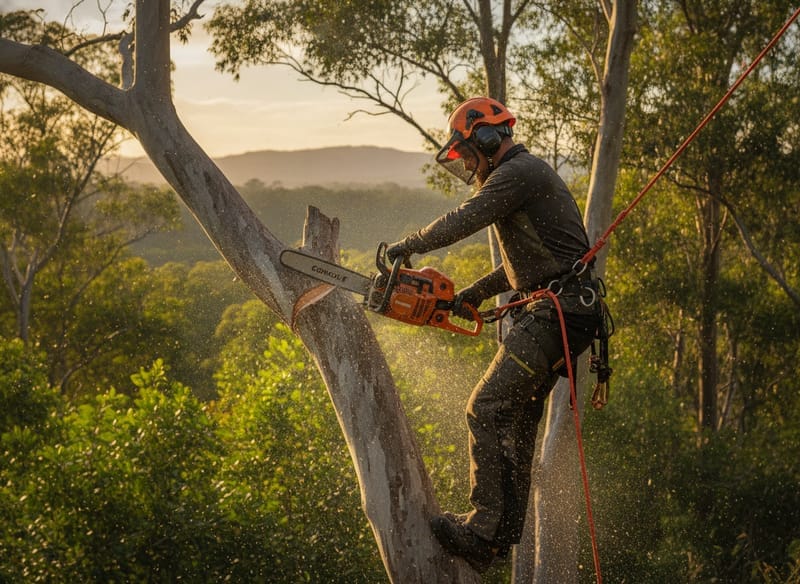
Our climbers or EWP crew cut and lower the branches systematically to protect ground assets.
We verify the tree maintains good form and doesn't suffer extreme structural imbalances.
We chip all waste timber and leave the site raked, swept, and fully clear.
When it comes to managing overgrown or hazardous trees on your property, finding reliable Tree Lopping Port Curtis is essential for the safety and aesthetics of your home. Situated right on the Fitzroy River flood plain, properties in Port Curtis and neighbouring Depot Hill are frequently exposed to saturated soils, heavy wet-season downbursts, and the lingering impacts of severe weather. When large backyard Mangoes or towering Forest Red Gums become too large or begin encroaching on your roofline, expert intervention is required.
Our team understands exactly what homeowners mean when they ask for a tree to be "lopped"—you want the height reduced, the overhanging limbs cleared, and the tree made safe without necessarily removing it entirely. However, not all tree reduction is created equal. We specialise in targeted, standard-compliant pruning that achieves your goals of making the tree smaller and safer, without resorting to damaging cuts that cause structural decay. Whether you are dealing with a heavy Raintree canopy shading out your yard or storm-stressed branches leaning toward your shed, our climbers and ground crews have the local experience to handle it safely.
In horticultural terms, traditional "lopping" involves indiscriminately cutting branches back to a stub or "heading back" the main trunk. Many under-qualified operators or DIY enthusiasts take this approach to quickly reduce a tree's size. Unfortunately, this is one of the most damaging things you can do to mature canopy in Rockhampton. Topping cuts remove the tree's primary energy source, triggering a panic response where weak, fast-growing epicormic shoots sprout from the stubs. These new branches are poorly attached and highly prone to snapping during our violent summer thunderstorm downbursts. Furthermore, large stub cuts rarely heal, allowing rot and decay to travel directly into the main trunk. This turns a once-healthy tree into a severe hazard, especially on the waterlogged river flats of Port Curtis. Our solution is to apply strictly AS4373 (Pruning of Amenity Trees) compliant methods. When you ask us to reduce the size of your tree, our AQF Level 3 climbing arborists use targeted techniques like crown reduction and crown thinning. We make clean collar cuts back to a lateral branch capable of sustaining the limb's growth. This approach achieves the size reduction and clearance you need, while preserving the structural integrity and long-term health of the tree, ensuring it stands strong when the next cyclone remnant pushes through Central Queensland.
When you request a "lopping" service to make your tree smaller, we assess your specific goals and apply the correct arboricultural technique to achieve them. Our methods guarantee a safer, better-looking tree that won't become a structural liability down the track.
When a tree has outgrown its space, we perform a crown reduction to decrease its overall height and spread. Instead of flat-topping the canopy, we carefully prune outer branches back to appropriate inner lateral branches. This maintains the natural shape of the tree while achieving the desired size reduction, keeping within the AS4373 guideline of removing no more than 25–30% of the live foliage.
If low-hanging branches are blocking driveways, pedestrian access, or rubbing against your roof, we lift the canopy. We selectively remove the lower branches back to the trunk collar. This is highly effective for large Moreton Bay Figs and Mango trees in older Rockhampton properties, providing clear space beneath without stunting the upper tree.
Sometimes a tree doesn't need to be shorter; it just needs to be less dense. We selectively remove secondary branches throughout the canopy. This allows high winds to pass through the tree rather than pushing against it like a sail—a critical preventative measure for Port Curtis properties exposed to summer downbursts—while also letting more natural light hit your lawn.
Targeted reduction of specific limbs that are encroaching on powerlines, fences, or neighbouring boundaries. Our arborists use advanced rope-access techniques to isolate and dismantle the problem limb section by section, ensuring zero impact to the structures below.
Following severe weather events, we provide rapid-response reduction of damaged or shattered canopies. We safely remove hanging "widow-makers" and re-balance the remaining canopy to salvage the tree where possible, utilising our elevating work platforms (EWPs) where safe access permits.
Every canopy reduction job we undertake begins with a thorough site assessment. When you contact us, an experienced arborist will visit your Port Curtis property to inspect the tree's health, its proximity to structures, and the surrounding terrain. We also conduct a quick check of the RockePlan mapping system to see if your property falls under the Biodiversity areas overlay or the Heritage place overlay, advising you if a Council Tree and Vegetation Approval is required. Once the scope is agreed upon and a fixed-price quote is approved, our team arrives fully equipped. For accessible flat blocks on the river plain, we often deploy our Elevating Work Platforms (EWPs) to safely reach the upper canopy. For tighter side-access typical of older homes, our AQF Level 3 climbing arborists use twin-rope access techniques to navigate the tree, precisely dismantling overextended branches. All cut material is lowered safely to the ground using rigging gear to protect your gardens and fencing. Our ground crew then processes the limbs through our 12-inch wood chippers. We clean the site meticulously, leaving you with the option of keeping the freshly chipped mulch for your garden beds or having our tipper trucks cart it all away.
Canopy reduction is high-risk work that demands absolute professionalism. Our team is fully insured with comprehensive public liability and WorkCover insurance, protecting your property and our staff at all times.
We operate strictly under the AS4373 - Pruning of Amenity Trees standard, which prohibits damaging topping cuts and ensures your trees remain structurally sound. All our on-tools staff hold AQF Level 3 in Arboriculture alongside current Working at Heights, EWP, and First Aid tickets. If your project requires formal council approval or a health assessment, our AQF Level 5 consulting arborist can provide the necessary reports to satisfy Rockhampton Regional Council requirements.
Port Curtis is heavily influenced by its position on the Fitzroy River. The ground frequently becomes waterlogged during flood events, severely stressing local species like Raintrees, Mangoes, and Forest Red Gums. After ex-Tropical Cyclone Koji pushed the Fitzroy into flood in January 2026, many trees suffered root plate movement and canopy damage. Currently, the Rockhampton Disaster District has a state clearing exemption running until 17 January 2027. This allows property owners to undertake necessary clearing and reduction work to prevent property damage or mitigate immediate hazards without formal council approval. However, outside this exemption, it is critical to check the Rockhampton Region Planning Scheme. If your Tree Lopping Port Curtis project falls inside a mapped Biodiversity area overlay or involves vegetation on a Heritage-overlaid property, an AQF Level 5 arborist report and Council approval are typically mandatory. Remember, pruning street trees on the verge outside your home is completely prohibited under Local Law 1; that remains strictly Council's jurisdiction.
Once our team has completed the pruning work and cleared the site, your tree will begin the process of compartmentalising the pruning cuts. Ensure the tree receives adequate water during Rockhampton's long, hot dry spells to reduce stress. If you opted to keep the wood chips, apply a 75mm to 100mm layer of mulch over the root zone, keeping it clear of the immediate trunk base to prevent collar rot. Monitor the tree over the next few months for any rapid epicormic sprouting—a sign of stress—and contact us if you notice fungal brackets forming near the pruning sites so we can provide follow-up arboricultural advice.
Pricing for canopy reduction and tree lopping services in Port Curtis depends on the scale of reduction and access.
We provide honest, upfront quotes that clearly explain our method and all costs involved.
We handle canopy reduction and tree management across Port Curtis and surrounding suburbs:
Contact our qualified arborists for safe, professional canopy reductions.
Get a Free Quote