Lowered Canopy Profile
Bring oversized trees back down to manageable proportions without creating dangerous decay pockets.
Transform overgrown, out-of-control trees through safe canopy reduction and professional crown management in The Range.
Managing overgrown tree canopies across The Range, Allenstown, and Wandal.
Homeowners searching for Tree Lopping The Range typically have an overgrown tree encroaching on buildings, blocking light, or threatening roofs. While traditional lopping damages trees by topping main stems, our arborists provide professional canopy reduction that achieves your height and space goals safely.
In The Range, fast-growing backyard Mangoes and large Poincianas often outgrow small residential yards. Crude lopping invites wood decay and termite entry, making professional crown reduction the responsible choice.
Bring oversized trees back down to manageable proportions without creating dangerous decay pockets.
Reduce the leverage and mechanical stress on long lateral branches during high summer winds.
Open up shaded yards and verandahs to natural light while keeping the shade canopy functional.
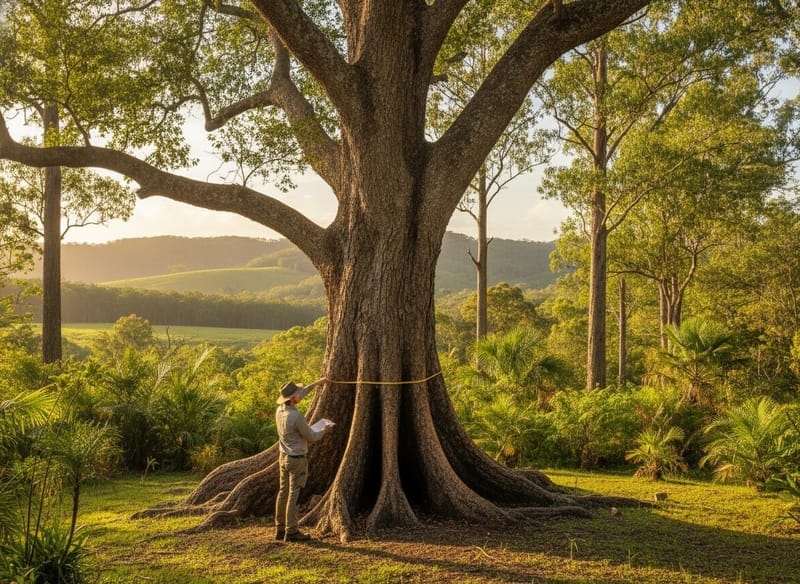
We assess the tree's growth pattern, past cutting history, and structural requirements on your Range property.
We establish reduction points that cut back to viable lateral branches rather than arbitrary flush topping.
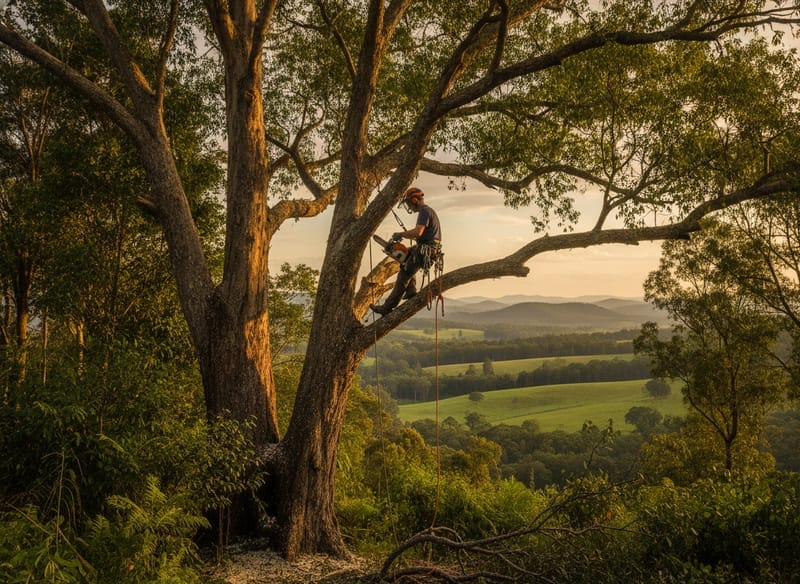
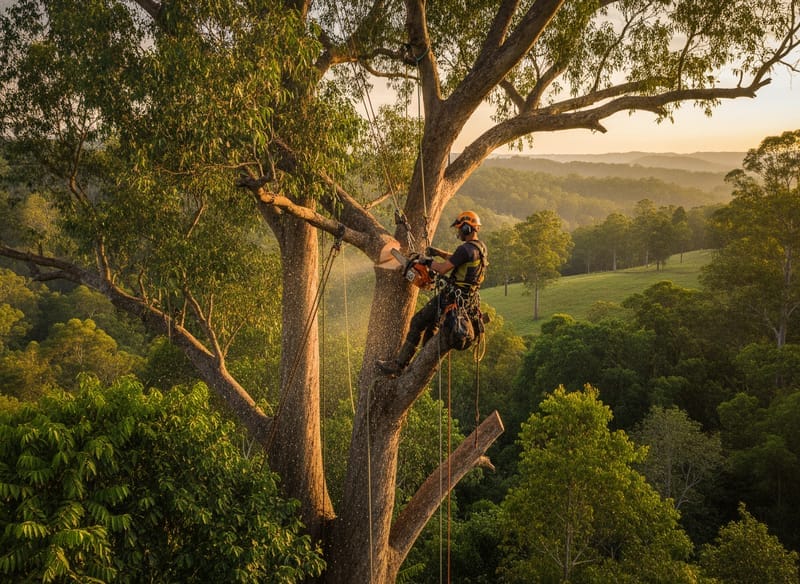
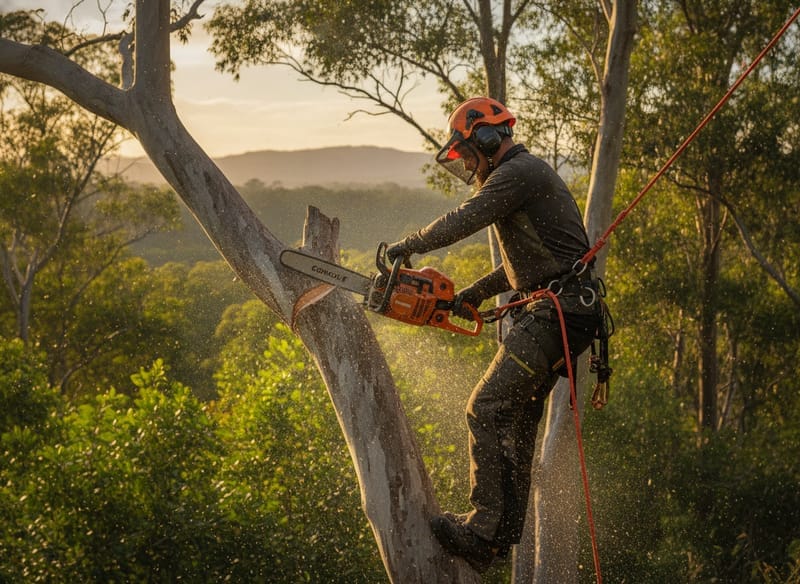
Our climbers systematically lower the canopy height and width using specialized rigging techniques.
All cut branches are chipped on site, and your yard is raked and blown clean.
Welcome to Rockhampton Arborist. If you are looking for the professional Tree Lopping The Range locals trust, you have come to the right place. The older streets of our suburb are famous for their beautiful, established canopy, but managing massive Moreton Bay Figs and sprawling Poincianas over heritage Queenslanders takes serious expertise. Whether you are a homeowner dealing with a giant Mango tree casting too much shade, or a property manager needing a canopy pulled back from a roofline, we know exactly how to bring your trees back under control.
Our team of qualified climbers and ground crew are on the ground every day in The Range and surrounding areas like Allenstown and Wandal. We understand that when locals ask for tree lopping, they usually want to make a tree smaller, shorter, or safer. We deliver exactly that outcome, but we do it using proper arboricultural techniques. We reduce your hazard and improve your clearance without compromising the health of the tree or the safety of your property.
There is a big difference between indiscriminately hacking at a canopy and professional tree reduction. True "lopping" or "topping"—where branches are simply cut mid-limb leaving large, ugly stubs—is heavily discouraged by qualified arborists. It forces the tree into a panic state, causing it to push out weak, rapid epicormic regrowth. In the dry tropics, trees stressed through winter get hit by saturated soils and thunderstorm downbursts in summer. Those weak regrowth branches are highly prone to snapping off and damaging property during our violent wet season. DIY attempts or hiring under-qualified operators often leaves your property exposed to massive liability, especially when working over the tight fence lines and tin roofs common in The Range. A poorly lopped tree is essentially a ticking time bomb for aggressive decay and sudden structural failure. Instead, a proper AS4373-compliant approach is essential. When you call us to reduce the size of a tree, we use targeted crown reduction and thinning techniques. We cut back to the branch collar and natural growth points. This achieves your goal of a smaller, safer tree, but ensures the resulting growth is strong, predictable, and structurally sound enough to withstand a heavy tropical downburst.
When you ask us to lop or reduce a tree, we utilise specific, Australian Standard-approved techniques to get the overall size down while maintaining structural integrity.
Decreasing the overall height and spread of the canopy by cutting branches back to a lateral branch large enough to assume the terminal role. This is the correct arboricultural alternative to aggressive topping, perfect for trees outgrowing their designated space.
Removing lower branches to provide essential clearance for pedestrians, vehicles, or buildings. This is a highly effective way to manage mature street-front trees and sprawling Poincianas in older residential blocks without reducing the upper canopy.
Selectively removing secondary branches throughout the canopy to reduce wind resistance and increase light penetration. This allows severe tropical winds to pass through the tree safely without fundamentally changing its natural shape.
Targeting specific problem limbs, such as those encroaching on gutters, powerlines, or shading solar panels, while leaving the rest of the canopy intact and structurally balanced.
Rapid risk-mitigation cutting following storm damage or heavy limb failure. We safely reduce the weight and height of compromised trees to prevent imminent failure, buying time to determine if long-term retention is viable.
When you book us for Tree Lopping The Range, this is exactly how we manage the job from the first phone call to the final cleanup:
Our tree work is strictly governed by AS4373 (Pruning of Amenity Trees) to ensure every cut promotes long-term stability rather than rapid decay. We are a fully insured local business carrying comprehensive public liability and WorkCover for all our staff, giving you complete peace of mind when we are operating heavy machinery or chainsaws over your home. Every climbing arborist on our team holds an AQF Level 3 in Arboriculture at a minimum, alongside up-to-date working at heights, EWP, and first aid certifications. We do not take shortcuts with safety, especially when rigging heavy timber in the confined residential spaces of our older suburbs.
Working in this specific area requires serious local knowledge. The grand old Queenslanders here are often surrounded by massive Moreton Bay Figs, spreading Poincianas, and towering Mango trees. Navigating these sprawling canopies in tight, narrow-access yards is our specialty, and our climbers are trained to operate carefully around heritage features. We also navigate the Rockhampton Regional Council planning scheme daily. Many properties here fall under the Heritage place overlay, which can complicate major tree works. Furthermore, with the ongoing impacts of the January 2026 ex-Tropical Cyclone Koji floods along the Fitzroy River, there is currently a state disaster clearing exemption running until January 2027. We know exactly how to assess storm-damaged, leaning, or hazardous trees to determine if they qualify for immediate reduction under this exemption, ensuring your property is safe without breaching council regulations.
After a significant canopy reduction, your tree will need a little time to recover. We recommend giving the root zone a deep soak, especially during Rockhampton's long hot dry spells, to alleviate pruning stress and support healthy wound closure.
Monitor the cut sites over the following months. Because we use proper branch collar cuts, you should see healthy wound wood forming around the edges. Keep an eye out for any aggressive, straight-up epicormic shoots. If your tree was previously subjected to poor lopping and is pushing out heavy, weak growth, call us back in 12 to 18 months for a structural assessment before the next wet season hits.
Pricing for canopy reduction and lopping alternatives in The Range depends on tree size, branch density, and work site access.
We provide upfront, written quotes detailing our canopy reduction methods with transparent pricing.
We provide canopy reduction and tree management across The Range and the wider Rockhampton region.
Contact our qualified arborists for professional canopy reduction and crown control.
Get a Free Quote